Capital Farm Credit interns reflect on a summer of growth and impact
Author: Capital Farm Credit
Posted on: 8/6/26
By Logan Summerville, CFC Marketing Intern
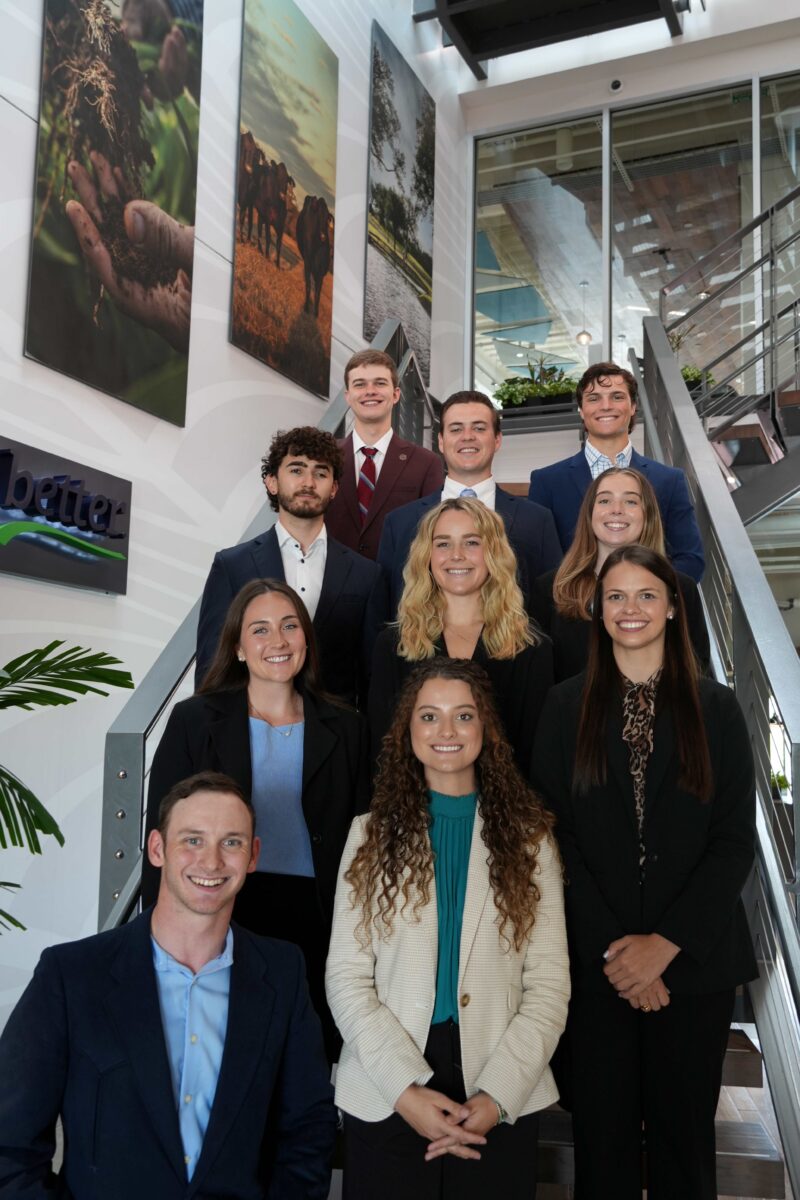
This summer, I was among 10 Capital Farm Credit interns, who worked on projects that addressed real opportunities and challenges across the organization and the agricultural industry. From emerging technologies and customer experience initiatives to water resources and producer education, each project gave us the chance to contribute meaningful work while gaining hands-on experience. As the internship program concludes, we reflected on the projects completed, the lessons we learned and the experiences that made the summer memorable.
Layken Farrar – Row Crop Training for Relationship Managers
Major: Agribusiness, Lending intern in Lubbock

Layken Farrar developed a training seminar aimed at helping relationship managers strengthen their knowledge of row crop production, using ELS cotton as a sample module.
Having grown up around cotton production herself, she wanted to connect her background to what she was learning during the internship, and conversations with the YBS team helped shape the idea.
Speaking with producers and relationship managers taught her how deeply production practices, costs, marketing and risk all factor into a single lending decision. She said agricultural lending involves far more than reviewing financial statements. It requires understanding a borrower’s operation and long-term goals and building a real relationship along the way.
Looking back, Layken said the most impactful part of her summer was simply learning from people who make a difference in others’ lives.
Bryson Stone – Strategic Growth for Capital Farm Credit Insurance
Major: Agriculture Economics, Crop Insurance intern in Lubbock

Bryson Stone researched potential Texas regions for future Capital Farm Credit Insurance acquisitions, aiming to build a blueprint the insurance team could use for future growth.
The project let him apply skills from his day-to-day work toward something with long-term impact and taught him how to turn multiple sources of data into clear, easy-to-understand visualizations.
He came into the internship already aware of Capital Farm Credit’s family-oriented reputation but said he didn’t fully grasp how much that culture contributes to the company’s success until he experienced it firsthand.
“When you are surrounded by good people who want to help you and see you succeed, it makes everything much easier and enjoyable,” Bryson said.
Crew Goodson – The Capital Farm Credit Performance Hub
Major: Agricultural Economics, Lending intern in College Station

Crew Goodson built a proof-of-concept coaching and performance dashboard called the CFC Performance Hub, applying skills from Texas A&M’s AI in Business minor.
What began as an exploration of AI opportunities within the Bryan credit office evolved into a coaching dashboard concept that he further developed and refined. Rather than creating a finished product, Crew aimed to demonstrate how the tool could save time, improve efficiency and reduce human error.
One of his biggest takeaways was the value of seeking feedback early, noting that, “The constructive criticism was very beneficial to making the flow and message of my project clear and professional.”
While the project strengthened his technical skills, Crew said the most impactful part of his summer was the opportunity to learn from and connect with others, including employees across the organization, fellow interns, and the farmers, ranchers and customers he met throughout the summer. Those experiences reinforced his belief that Capital Farm Credit’s culture is more than a mission statement; it is something employees live out every day.
Chloe Barrientes – Data Centers and Rural Texas
Major: Business Management, Legal & Real Estate Title intern in College Station
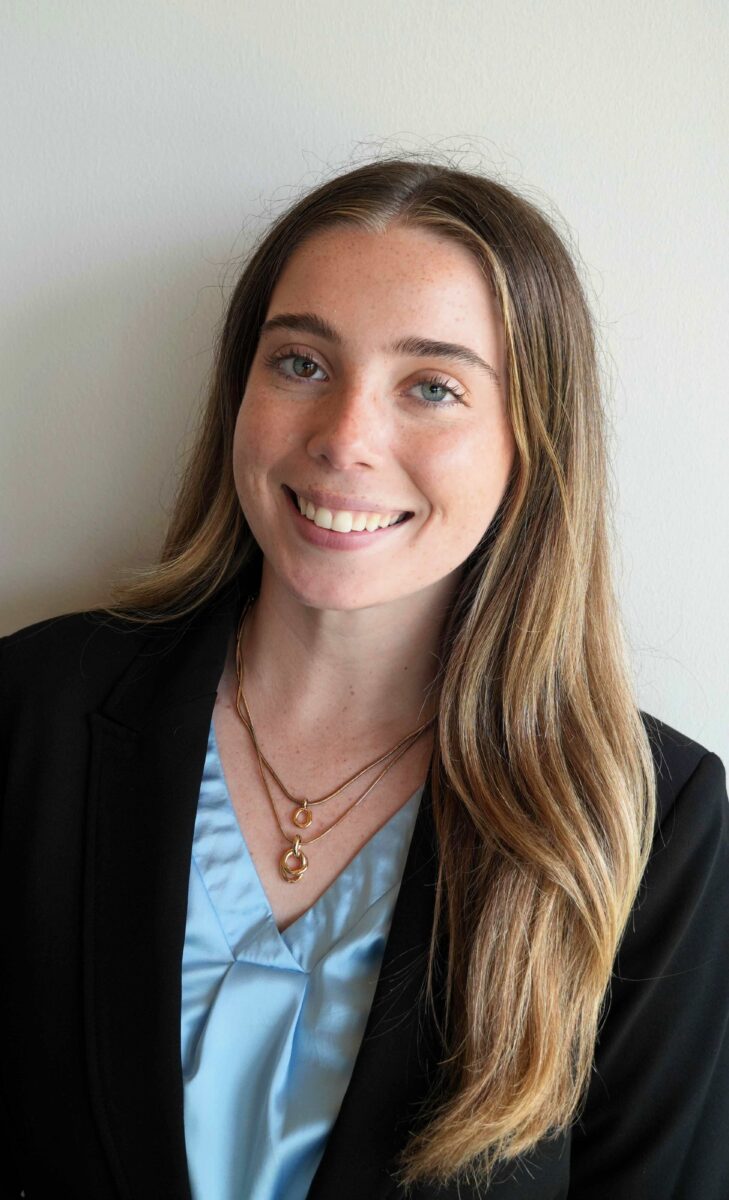
Chloe Barrientes researched the rapid growth of data centers in rural Texas and what role Capital Farm Credit could play as regulations around the industry develop. She wanted to understand how the data center boom might affect agricultural communities, water use and land values, and what producers expect heading into the next legislative session.
The work taught her to sit with ambiguity. “Sometimes the answer isn’t always black or white,” Chloe said, describing the gray area between embracing new technology and protecting the borrowers it could affect.
Shadowing different departments this summer also showed her how each role connects to the broader mission of Capital Farm Credit and the Farm Credit System. Above all, she said, the relationships she built this summer reflected how much the company “prioritizes its people.”
Daegan Sauve-Cadarc – Updating Capital Farm Credit’s AI Usage Policy
Major: Management Information Systems, IT intern in College Station

Daegan Sauve-Cadarc spent his summer revising Capital Farm Credit’s AI usage policy, drawing on his own experience building and using AI tools. His goal wasn’t to discourage AI use, but to give employees clear guardrails for working with sensitive data and personal information. The project sharpened his sense of how costly a small mistake can be.
“Someone can paste information into an AI tool thinking it’s harmless, but that data is out there,” Daegan said, adding that most employees are well-intentioned but simply don’t know where the line is. “Education matters as much as the policy itself.”
Daegan also learned that Capital Farm Credit is a cooperative something he hadn’t expected.
“The borrowers are actually the owners,” he said. “You can feel that in how everyone here talks about them.”
Between field trips, community events and how well interns were treated this summer, Daegan said the experience felt like more than a job. “It made the summer feel like more than just a job and more like a family,” he said.
Makensie Till – The AgriRoots Experience Network
Major: Masters of Agribusiness, YBS intern in College Station
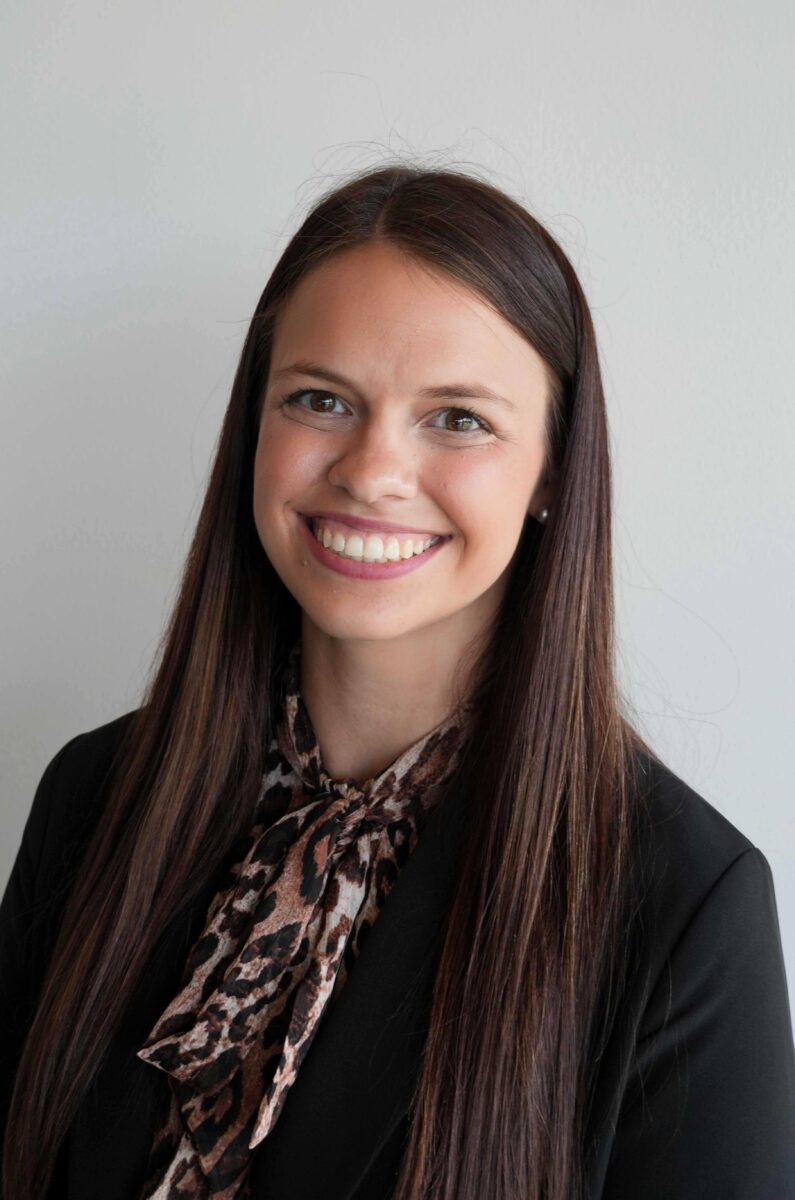
Makensie Till developed a concept called the AgriRoots Experience Network, designed to connect young, beginning and small producers with experienced agricultural mentors through job shadowing and hands-on learning.
The idea was shaped by watching her cousin work to establish himself in agriculture and reinforced by conversations at the YBS Customer Council meeting, where producers described similar challenges.
The project convinced her that relationships are the true foundation of business.
“Agriculture thrives when people are willing to share their knowledge, mentor others and work together toward a common goal,” she said.
Makensie also learned that Capital Farm Credit offers crop insurance alongside its lending services, giving her a more holistic picture of how the cooperative supports producers.
She said the YBS team’s mentorship made her feel valued from day one and shaped the kind of workplace culture she hopes to find throughout her career.
Keifer Gunn – Expanding Power BI Support
Major: Masters of Science in Management Information Systems, Strategic Operations intern in College Station

Keifer Gunn’s project examined opportunities to expand support for Power BI across Capital Farm Credit after noticing how much the tool was already relied on.
“There was a heavy need to use it,” he said. His goal was to show that broader support shouldn’t rest on one person alone.
Keifer found that far more departments wanted to use Power BI or use it more than he expected. That discovery reflected something bigger about the company: how willing teams are to collaborate and help each other succeed.
Keifer said the summer helped him grow his Power BI skills while building connections across the organization.
Emma Price – The Colorado River and the Water Shortage
Major: Agriculture Leadership and Development, Lending intern in Victoria
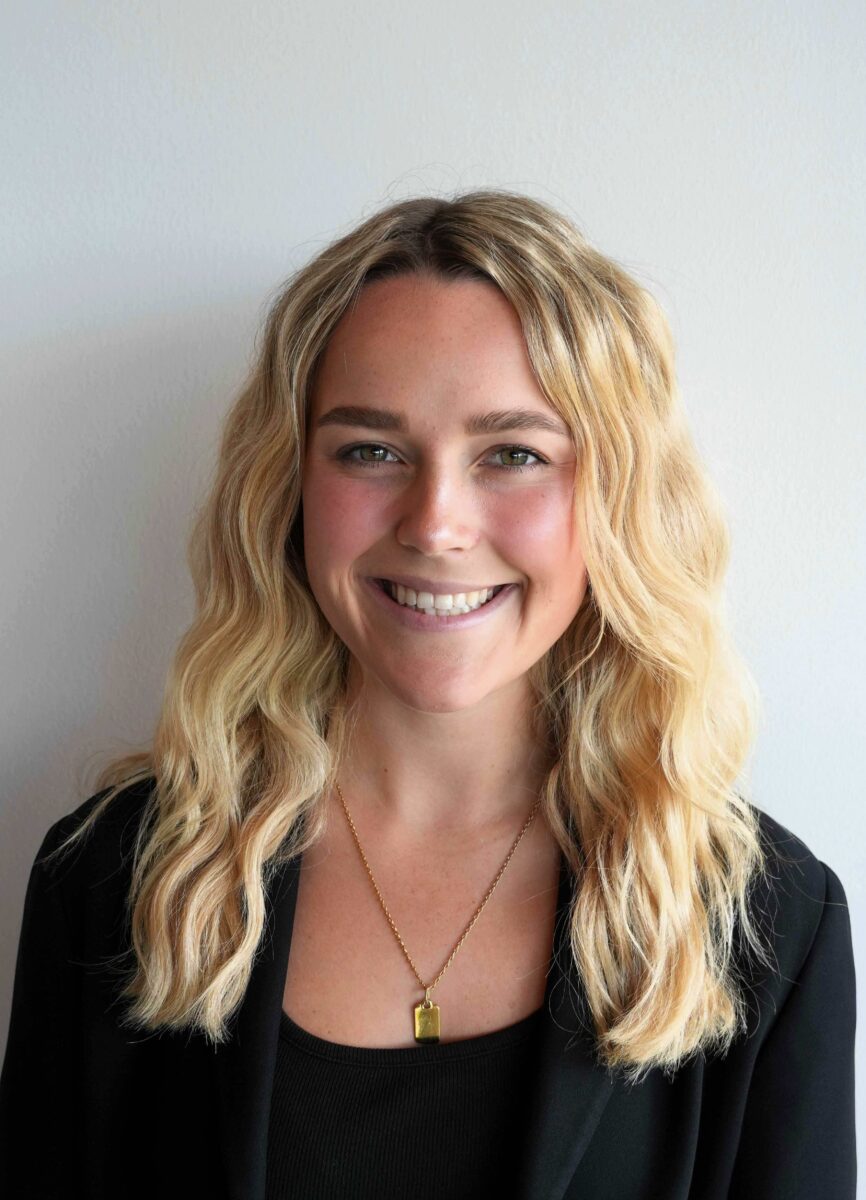
Emma Price focused her project on the Colorado River water shortage and its ripple effects across agriculture, hoping to raise awareness about an issue she sees as far-reaching.
“It has an impact on our world, and I wanted to help bring awareness and change to the problem,” she said.
Researching the topic showed her just how much the river’s health is tied to the livelihoods of farmers and ranchers, along with the broader ecosystem.
She also came away with a new appreciation for how many departments make up Capital Farm Credit, and how many small steps go into the lending process. For Emma, the connections and relationships she built this summer were the most lasting takeaway, something she said she’ll carry into everyday life.
Tres Spencer – A Customer Experience SharePoint Page
Major: Double major in Agriculture Economics and Animal Science, Lending intern in San Antonio

Tres Spencer built a customer experience SharePoint page designed to speed up communication between lenders and borrowers, giving both lenders and loan admins tools they can use, and share, throughout the loan process.
The idea came from shadowing lenders and loan admins in the San Antonio office and noticing how much back-and-forth slowed the application process down.
Along the way, he discovered how many resources Capital Farm Credit offers that most people don’t realize exist, including a financial literacy course he now hopes to take himself.
He was especially struck by the company’s patronage and allocated equities program, which returns money to borrowers. “Some of our borrowers do not realize we do this until after they get their first check,” he said.
Tres said being welcomed as part of the team from day one demonstrated the close-knit, family-like culture at Capital Farm Credit.
Logan Summerville – Positioning Marketing as a Strategic Partner
Major: Marketing, Marketing intern in College Station
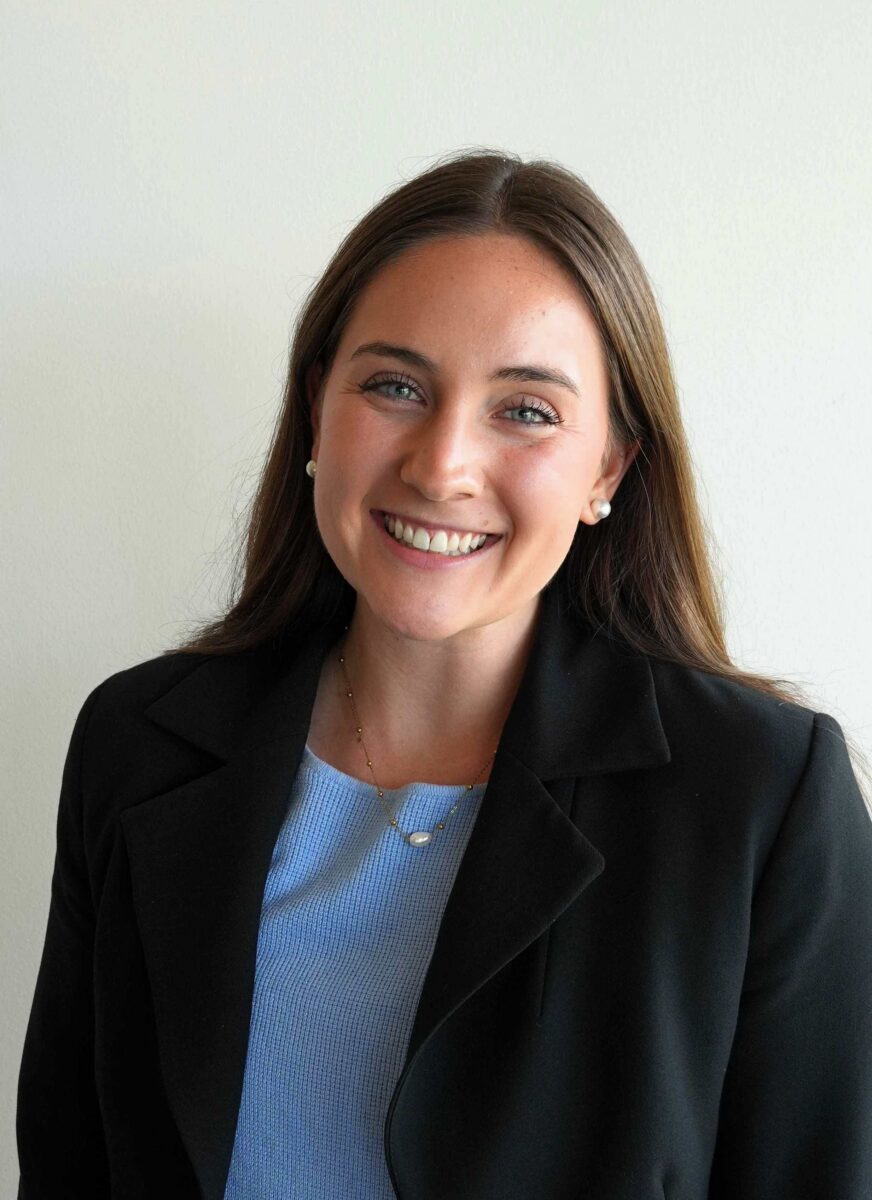
Finally, my internship project focused on helping position the Marketing Department as a strategic partner within Capital Farm Credit. I developed tools and recommendations to help other departments better understand Marketing’s role and involve the team earlier in planning conversations.
Through the project, I learned how important it is for teams to understand each other’s responsibilities and expertise, because strong collaboration often starts with knowing who to involve and when.
The most impactful part of my internship, however, was the people. The Marketing team welcomed me from day one, invested in my development and provided opportunities to learn from employees across the organization.
The experience showed me that Capital Farm Credit’s core values are reflected in the way employees support one another every day.
While no two internship projects were alike, one theme surfaced time and again: the people of Capital Farm Credit were just as memorable as the work itself.
Through meaningful projects, professional development and relationships built across the organization, we all gained experiences that will extend far beyond a single summer. Those experiences are a reflection of what makes Capital Farm Credit a unique place to learn, grow and contribute.