

Renowned ag economist provides keys to unlocking farm prosperity
Author: Kacee Kirschvink
Posted on: 11/10/25
The future of farming was in sharp focus at Capital Farm Credit’s 2025 AgriRoots Conference, as Virginia Tech Professor Emeritus Dr. Dave Kohl gave global insight and sage advice on how to navigate the industry’s current challenges.
With a blend of wisdom, humor and hard truths, Kohl challenged farmers and ranchers to think differently about their businesses, their legacies and their lives.
An academic Hall of Famer in Virginia Tech’s College of Agriculture and well-traveled presenter on ag economics, Kohl detailed the ag industry’s trends to over 150 ag producers attending the conference in October at the Stella Hotel in Bryan.
AgriRoots, an initiative by Capital Farm Credit, supports emerging farmers, ranchers, and agribusiness owners. Capital Farm Credit, led by its Missions and Young, Beginning and Small (YBS) Team, provides resources and financial solutions to help build sustainable and successful agricultural operations by focusing on growth, innovation, and financial literacy. Capital Farm Credit offers a range of loan products with competitive interest rates and services specifically tailored for Texas farmers and ranchers. As the largest ag lender in Texas, we know one size doesn’t fit all when it comes to agriculture and rural Texas, so we work with you to create a unique plan to success.
A new generation, a new mindset
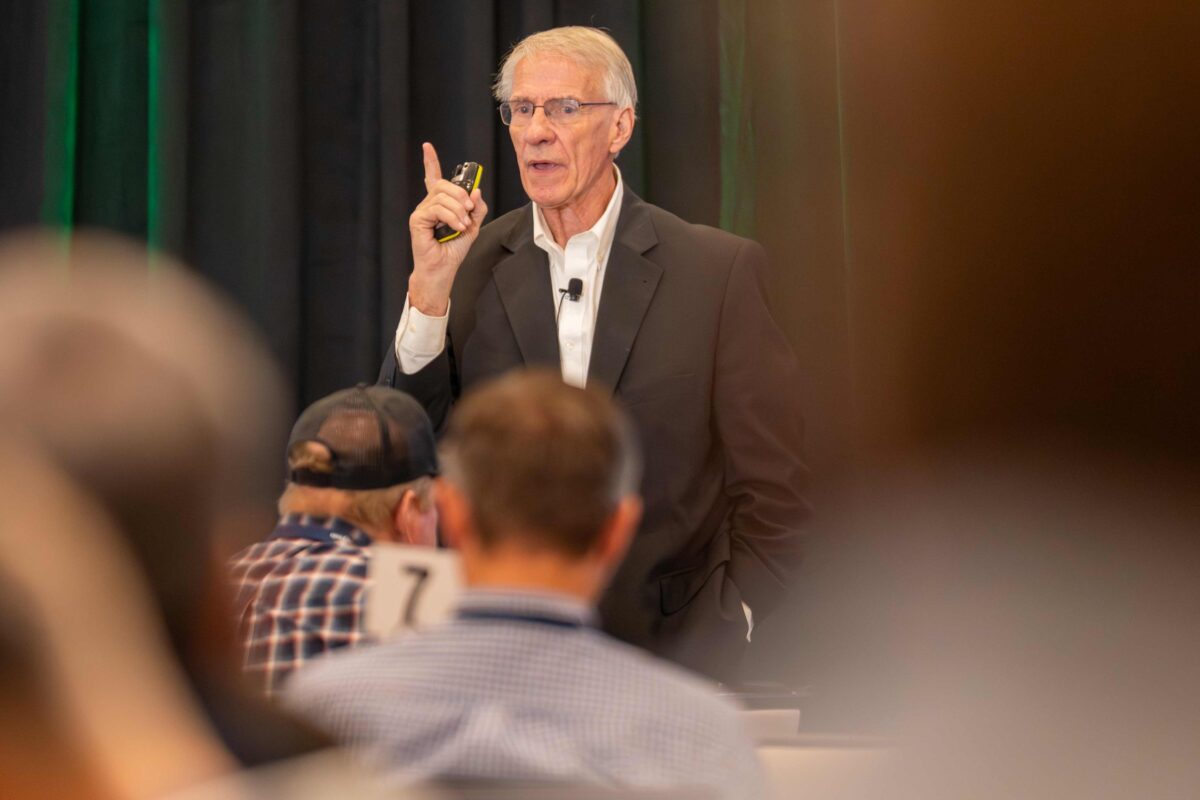
Ag producers today have a more business mindset than previous generations, Kohl said, adding that today’s farmers are more strategic, more diversified and more open to change.
Agriculture is no longer a one-size-fits-all industry. “It can be big or small,” he said. Accelerated transition is happening, and opportunities are around the corner.
People of all ages are entering the industry, with many starting ag businesses in their 40s, 50s and even 60s. He noted that a lot of new farmers and ranchers are moving their families out of urban areas to reconnect with rural life.
To succeed in business and withstand the highs and lows of agriculture, Kohl recommended that producers create strong business plans and stick to them, in both good times and bad times. He suggested ag producers have three to six different avenues of income – not just in agriculture – to enhance their financial security, increase earning potential and have greater flexibility.
Kohl also told attendees to focus on what they can control. Issues like weather extremes, tariffs and geopolitical events can be unpredictable, focusing on their business cash flow, debt service, risk and profitability can help them be more successful.
“We have a two- and 10-year rule — two out of every 10 years the weather lines up, the markets line up and we make tons of money. The other eight years, it’s break even,” he said. “This is why you’ve got to follow the process and have your plan.”
Living within your means
When it comes to profitability, Kohl offered a practical framework:
- 60% of profits should go toward getting better before getting bigger.
- 30% should build working capital – not just cash, but assets that can be turned into cash.
- 10% is for enjoying life.
“Be careful. Don’t let the 10 percent turn into the 60 percent,” especially in profitable years, he said.
Keeping an eye on expenses, as well as cash flow, is key to navigating the ag industry.
“Family living budgets are critical, critical, critical to the success of farmers and ranchers, and you need to keep them separate from the business,” he said. “Twenty-eight percent of family living expenses are in the farm expenses.”
Trends that are shaping this year and beyond
Kohl didn’t shy away from the complexities of global trade. He reminded the audience that “one in five dollars of net farm income comes from export markets,” and that when exports slow, farms feel the pain.
He expressed deep concern about counter tariffs and trade sanctions, as well as extreme weather.
He also urged farmers to pay attention to global weather patterns, especially in the Southern Hemisphere. “Weather in other areas of the world can change your harvest in a New York minute,” he said.
Kohl laid out future trends, including:
- Regenerative agriculture and soil health
- Women in ag, who will own 60% of ag assets by 2050
- Collaboration between agriculture and medicine for proactive health
He also touched on the role of AI, noting that it’s in the “infatuation stage,” and warned that relationships are going to be much more important as AI develops.”
Succession planning is also something that is becoming more important as ag producers reach retirement age. Many producers are now considering passing their operations to non-family members, because their heirs don’t want to continue in the business. He encouraged the use of tools like the “Drop Dead Exercise,” where families plan for what happens if the decision-maker suddenly passes away.
Kohl wrapped up his presentation with a reminder that success isn’t just financial—it’s personal. He shared eight habits for a fulfilled life:
- Drink water
- Exercise
- Eat well
- Take power naps
- Build a support network
- Have a life purpose
- Shut off tech and read
- Nurture faith and spirit
Perhaps most memorably, he closed with this: “The best crop you’ll ever raise will be your children, your grandchildren – maybe even a neighborhood.”